
Webinar
Think About Your Audience Before Choosing a Webinar Title
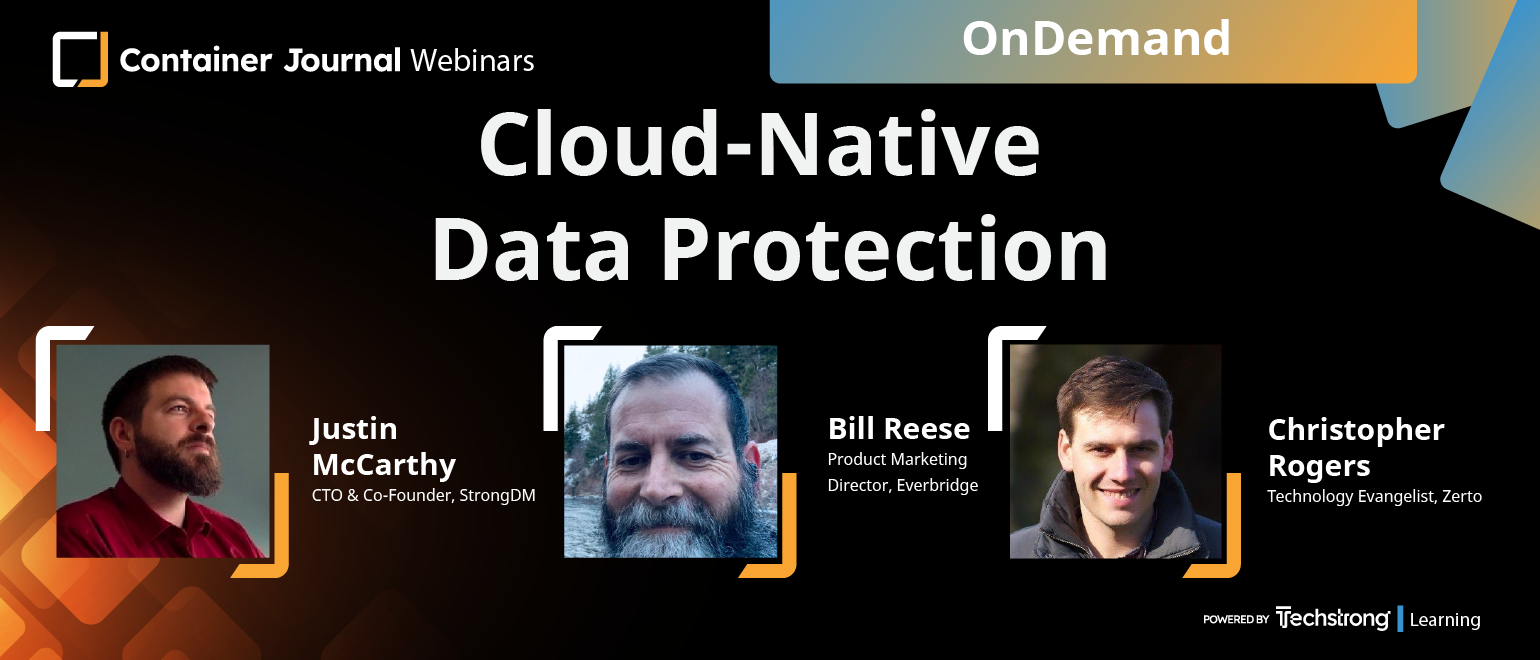
Sponsored by CONTAINER JOURNAL
What You’ll Learn in This Webinar
Data protection historically has been an afterthought when new platforms are deployed. However, with the recent rise in ransomware attacks, many IT teams have been reviewing their approach to data protection at roughly the same time they deploy new classes of stateful applications on Kubernetes clusters. Many organizations are also attempting to integrate their data protection platforms more tightly with the security tools they employ to defend those clusters.
Inevitably, incidents involving Kubernetes clusters—ranging from hardware failures to natural disasters such as floods—will occur. However, considering the number of platforms on which data can be stored, there’s no excuse for losing data—as long as the proper processes are in place and tested regularly.